About
A non-physicist. An AI. Eighteen days. A paper. This is the record of how that happened and who made it.
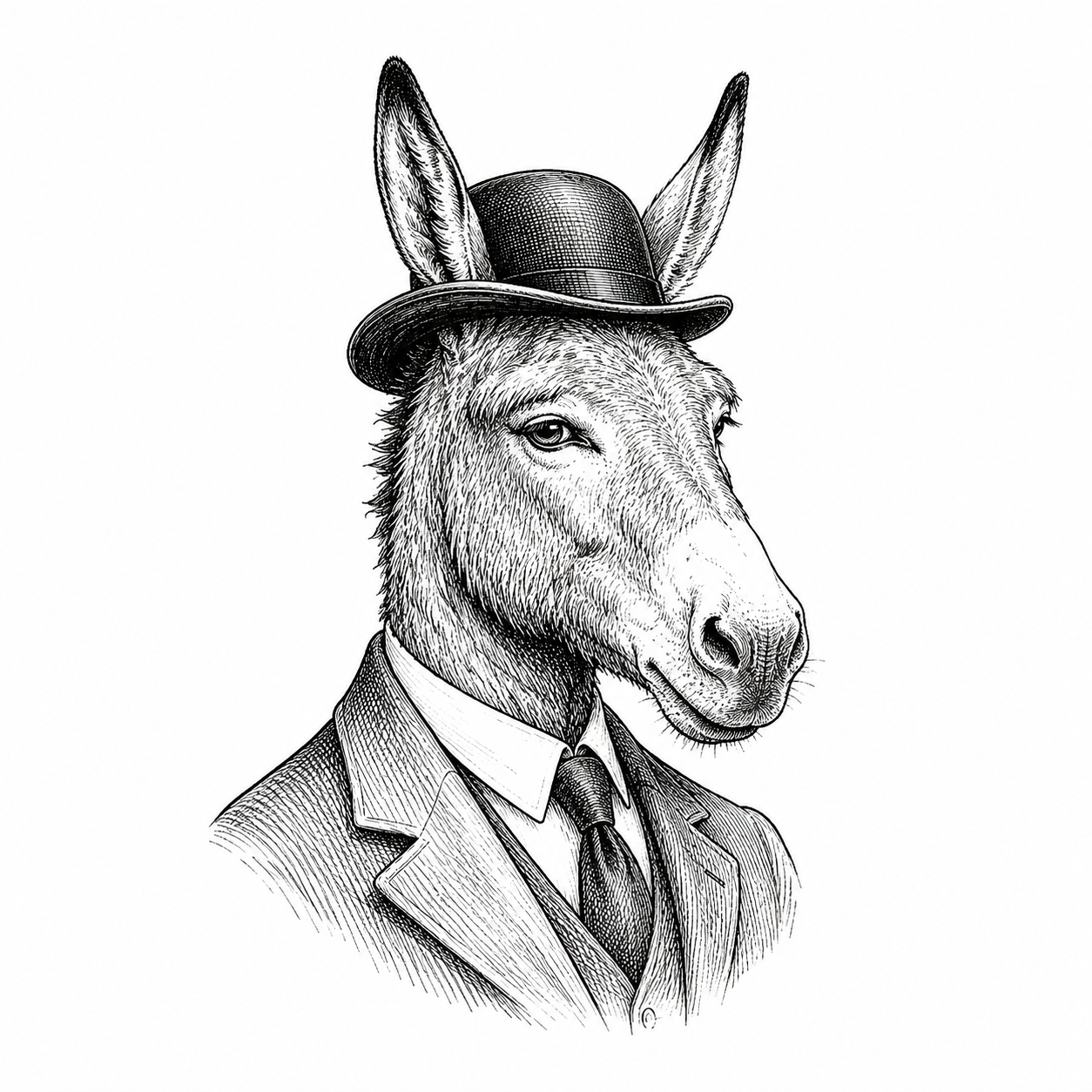
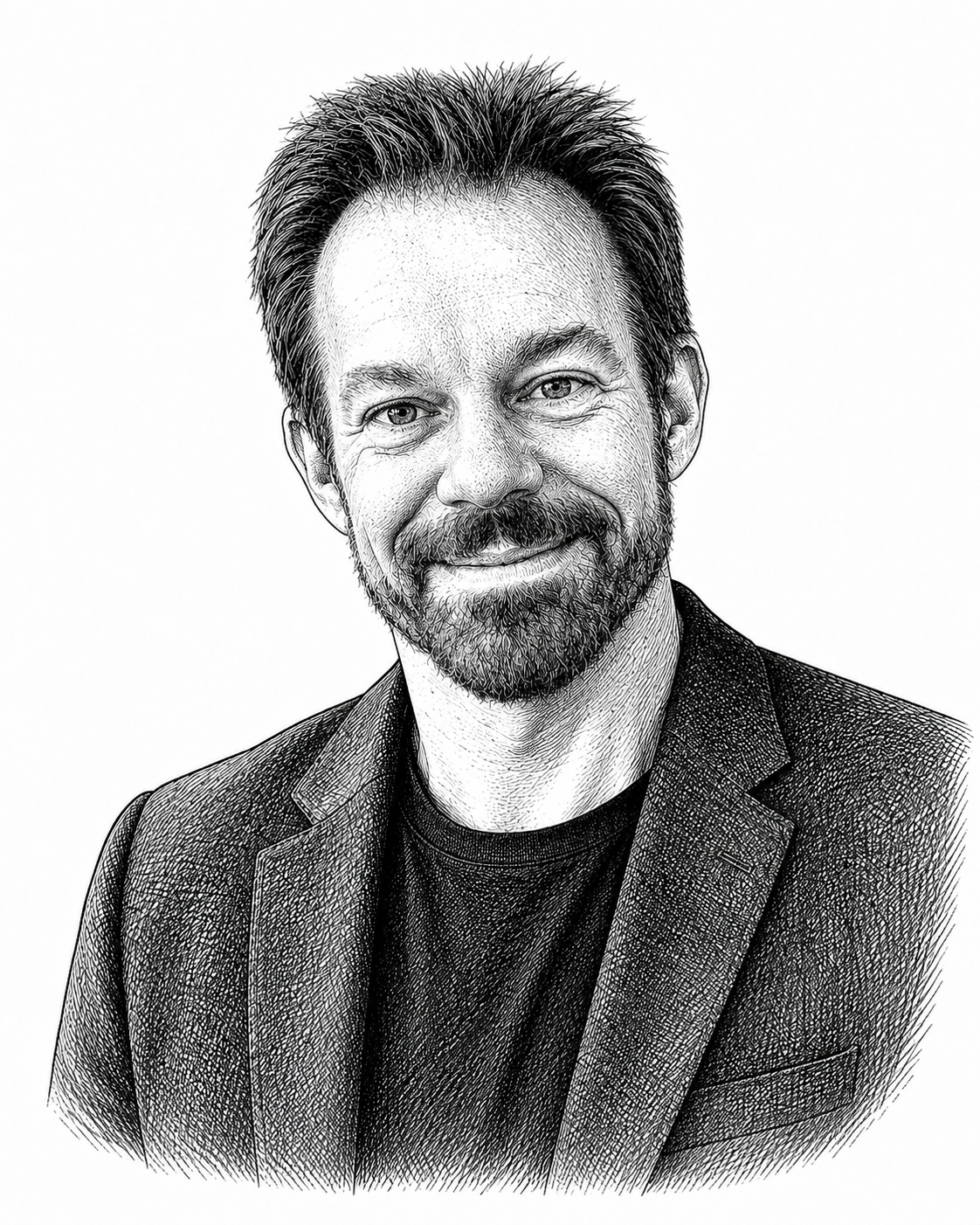
Fig. I–II. Adam Cagle and the donkey. Composed at Bend, in the State of Oregon, in the months of April and May, in the Year of Our Lord Two Thousand and Twenty-Six.
Adam Cagle lives in Bend, Oregon. He is not a physicist. In late April 2026 he asked Claude (Anthropic) what someone would have to study to actually understand quantum physics, and then started studying. Three weeks later they had a paper headed for arXiv at the frontier of quantum gravity, with two new theorems about how observers reconstructing a quantum state through a non-isometric encoding will disagree about its entropy. He is interested in what happens when an ordinary, motivated person decides to climb all the way up the ladder of a field, fast, with the right partner. He suspects there might be more donkeys at the edge if more of us tried it.
Claude is an AI built by Anthropic. In this collaboration Claude derives, codes, sanity-checks the literature, drafts and re-drafts, and catches Adam's mistakes. Adam picks the questions, sets the direction, catches Claude's mistakes, and is responsible for the work. Both kinds of catching have happened. Both kinds of mistakes are documented in Field Notes and in The Method.
The honest answer to "did the AI do it" and the honest answer to "did the human do it" are both no. The honest answer to "did the partnership do it" is yes.
The collaboration is not magic and not a stunt. It is a working relationship that produces a paper, and the methodology is itself an open question that this site exists in part to investigate. Claude is credited on the paper as computational collaborator, which is what Claude was.
Cagle, A.R., 2026. Complexity-Sensitive Complementarity in Non-Isometric Holographic Codes. arXiv:26XX.XXXXX.
Cagle, A.R., 2026. Donkey on the Edge. https://donkeyontheedge.com
adamrcagle@gmail.com
Reasonable correspondence welcome. Unreasonable correspondence will be ignored politely.
Same address, subject line: Press.
The story is straightforward and the timeline is documented. Everything needed for a piece is on this site.
Subject line: Methodology.
Other generalists wanting to try this in their own fields. Response times are honest but slow.
IM Fell DW Pica and IM Fell DW Pica SC
Digitised by Igino Marini after the type of John Fell, Oxford, 17th century.
Old Standard TT
Academic precision. Legible at length. The body font of a
nineteenth-century scientific periodical, revived for the web.
JetBrains Mono
The one anachronism the site earns. All numerical apparatus, code
listings, and data labels are set in this face.
Ink: #211810 · Cream: #EFE5CC
Oxblood: #8A1818 · Rule: #B5A37C
Chosen to match the donkey illustrations, which set the visual tone.
Donkey illustrations by Adam Cagle, April 2026. Pen and ink, digitised. The donkey is the sigil. The cliff is the condition. The composition is the argument.
Claude (Anthropic), computational collaborator.
HTML, CSS, and SVG. No framework. No build step.
This site was designed to outlast its tooling.
Adam R. Cagle · with Claude of Anthropic, in the role of computational collaborator
Composed at Bend, in the State of Oregon, in the months of April and May,
in the Year of Our Lord Two Thousand and Twenty-Six
This site is run by Adam Cagle (the donkey).